Showing posts with label managing feelings. Show all posts

Thursday, December 14, 2017

I Can Handle it! (emotions/problem solving)

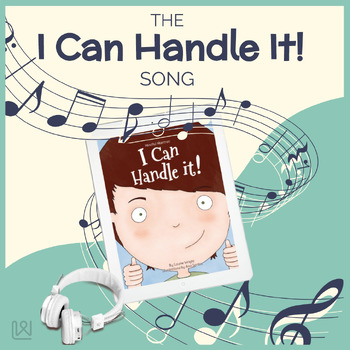
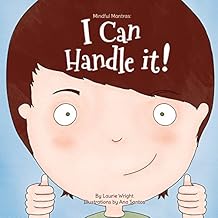
I Can Handle It! by laurie Wright is a book that I plan to use for elementary students (pre-k-2nd grade).  I am going to use this book with my first grade students as a supplement to our second step lessons.  The book lists strong emotions, the problem that caused the emotion, and a list of ways to solve the problem.  Some of the solutions are "nonsense" solutions but there are many good solutions as well.  For example, one of the feelings is frustrated.  The situation that causes frustration is adults not listening.  Solutions listed include; I can say, "excuse me", I can write a letter, I can tell someone else.  I think this is a great introduction to problem solving and this book will encourage students to think of ways that they can handle situations that may cause strong emotions.  Also, this book uses a mantra (automatic thought) that can be used to think clearly about the situation and come up with strategies to solve it.  I have not introduced mantras to students in the past but after reading more about how they can be used to help students I plan to try it out.  The mantra used in this story is "I can handle it!".
Product Details
You can purchase I Can Handle It! HERE.

Connections:

If you don't use Second Step this would be a good lesson to use with this book: https://classroom.kidshealth.org/prekto2/personal/growing/feelings.pdf

I Can Handle It by Laurie Wright (FREE)
I Can Handle It

I Can Handle It - Song

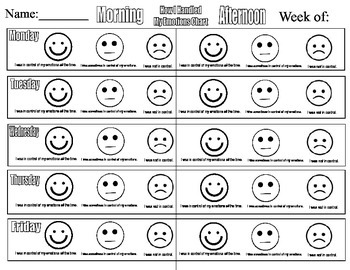
How I Handled My Emotions Chart

Thursday, March 31, 2016

Second Step Connections

I use the Second Step Curriculum in all of my k-2 classroom lessons.  I really love Second Step and it requires little planning.  I do like to use other resources to supplement my second step lesson though and today I am going to connect you to some of my favorite resources.  I found some really great worksheets on the TPT store Behavior Savers.  
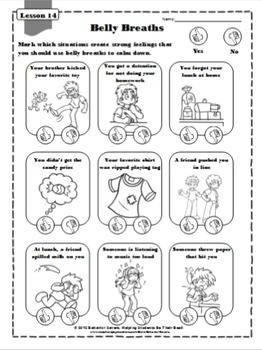
I love this Freebie from the Kindergarten pack:
Freebie...Second Step Kindergarten Belly Breath Worksheet
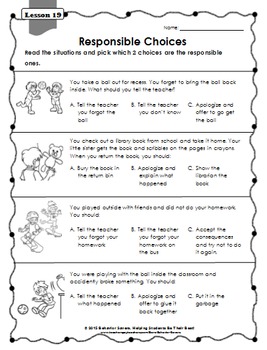
Here is a freebie from the 2nd grade pack:
Problem Solving-Making Responsible Choices-2nd Grade Secon

The other worksheets must be purchased but at $5.00 a packet they are very reasonably priced and include some great material!
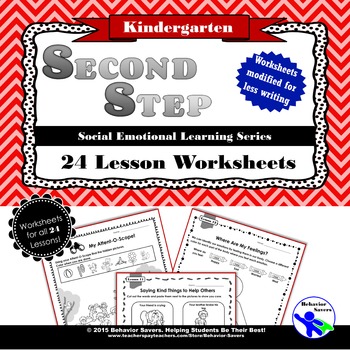
SECOND STEP KINDERGARTEN-24 Lesson Worksheets

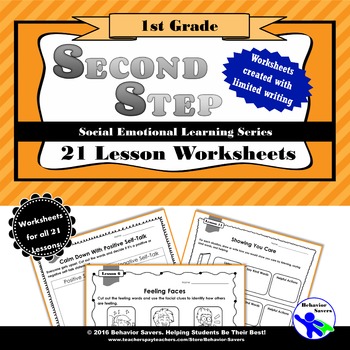
SECOND STEP 1st Grade-21 Lesson Worksheets

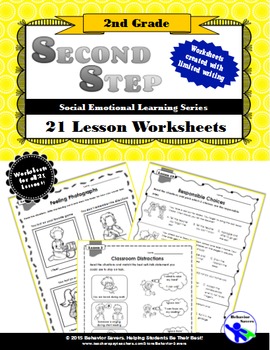
SECOND STEP 2nd GRADE-21 Lesson Worksheets

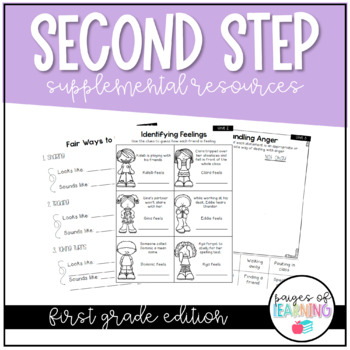
Paiges of Learning is another TPT store that sells supplemental Second Step Materials.  These packets are $3.00 each and she has a packet for 1st grade as well as one for 3rd grade.
Second Step Printable Pack {First Grade}

K-1 Second Step Song Lyrics

Book Connections (Skills for Learning)
Product Details
Product Details
Product Details
Product Details
Product Details

Product Details

Book Connections (Feelings)
Product Details
Product Details


Product Details
When I Feel Angry (Way I Feel Books)
Product Details

Product Details

Book Connections (Empathy):
Product Details

Product Details
Product Details

Book Connections:  Problem -Solving
Product Details

Product Details

Product Details

Product Details
Product Details

Book Connections (Playing Fair):
Product Details

Product Details


Friday, August 28, 2015

Anxiety Group (Wilma Jean the Worry Machine-Grades k-3)

10 Session Anxiety Group Using Wilma Jean the Worry Machine:


Session 1:  Introductions, getting to know activity, group rules, topic discussion, decorate folders.

Session 2:  Read Wilma Jean the Worry Machine.  Students fill out page 5 from the Activity Guide (What Are You Worried About?).  Arrange worries from in order from biggest to smallest.

Session 3:  Discussion about worries that you can control and worries that you can't control.  Fill out page 6 from the Activity Guide.

Session 4:  I Feel It Here (Page 7 in the Activity Guide).  Discussion:  When you worry about something, where can you feel it?  Discussion on how are body feels when we are worried.

Session 5:  Thoughts and Feelings (Page 8 in the Activity Guide).  Discussion:  Thoughts effect feelings.  Discussion:  How can we change our thoughts?  Positive self-talk practice.

Session 6:  How Do You Feel?  (Page 9 in the Activity Guide).

Session 7:  Strategies: pages 10-13 in the Activity Guide or  Worry Dolls, Worry Stones, Square Breathing, Figure 8 Breathing, Worry Box.

Session 8:  Worry or Unworry (page 20 in the Activity Guide).  Discussion:  how to make worries go away.

Session 9:  What Are They Worried About (page 22 in the Activity Guide) or "Stick It" To Your Worries (page 24 in the Activity Guide).

Session 10:  Worry-Free T-Shirt (page 19 in the Activity Guide) and Root Beer Worry Floats (page 10 in Activity Guide).

Follow Counseling Connections on Facebook!


Thursday, August 27, 2015

Anxiety Group (3rd-6th grade)

Session 1:  Begin with introductions, purpose of the group, group rules, and a get-to-know-you game. I usually do the M&M or Skittles Game.

Session 2:   A 5 Could Make Me Lose Control is then used to identify stressful situations.  Students spend time sorting through word/picture cards and rating the stress level associated with that particular situation/place/object.  For example, a student may take the cafeteria card and rate it as a 5. This tells you that the student views the cafeteria as a highly stressful environment.    (Newer version: A 5 Could Make Me Lose Control).
Session 3:  When my Worries Get Too Big! is a great follow up to  A 5 Could Make Me Lose Control!   This book offers strategies for dealing with the stressors that were rated in the 3-5 range. We begin the lesson by reading the book together.  This book is interactive in that it asks students to talk about things that they are good at, things that make them feel relaxed and finally, things that make them anxious.  The book gives an example of a calming-down sequence and strategies to reduce anxiety.

Session 4:  Review When My Worries Get Too Big!  Review calming down strategies listed in the book.  Students then create index cards with calming down strategies.  You can find some great free ones HERE or HERE.

Session 5:  Review the calming down sequence used in  When My Worries Get Too Big! Each student creates their own calming down sequence.

Session 6:   Create a plan! I love  these books on TPT!  Take all of the information gathered from the previous sessions and put it together to create a plan for managing anxiety.

Sessions 7-8:  Check-in with students/review calming down strategy plan, strategies and calming-down sequence.


Monday, April 20, 2015

Coping Strategies-Soda Pop Head


Another great book for teaching coping skills is  Soda Pop Head, by Julia Cook.  The story is about a boy named Lester, who is called "Soda Pop Head" because he blows his top when he gets upset.  Lester's dad teaches him some calming down techniques and Lester is able to manage his feelings. Once we read the story we create a T-Chart and list coping strategies.  We list negative coping strategies as well as the positive ones and then talk about the consequences of each choice.  Here are a few of the strategies my last group came up with:


My favorite coping strategy from the story is the "Push, Pull, Dangle".


You can also purchase the activity book here:  Activity and Idea Book.

Connections:  Third Grade Bookworm FreebieCounseling HeartsYouTube Video...soda explosion,teachers pay teachersteachers pay teachersteachers pay teachers 

Sunday, April 19, 2015

The Grouchies-Positive Thinking

This is a great book for all ages.  I have used it with kindergarten students and I have used it with fifth graders.  The message is simple:  Negative thoughts can get in the way of having a good day.

Descriptions of book from the cover:  What can you do when the grouchies take hold?  How can you keep a bad mood at bay?  With funny rhymes and a silly chant, The Grouchies shows kids simple and fun ways to turn around grouchy moods.  But most of all, kids will understand how their mood and negativity can affect their family and frineds, and really get in the way of having a good day.
An extensive Note to Parents further explains the child’s expreience and provides parents with easy-to-apply tips and tools for helping their kids when a grumpy day comes along.


Discussion: 
What happened that made the boy feel grouchy?
What did he keep repeating in his head?
Is this an example of negative thinking or positive thinking?
Did this thought make him feel better or worse?  How can you tell?
How did his friends and family feel?
How can you keep the grouchies away?
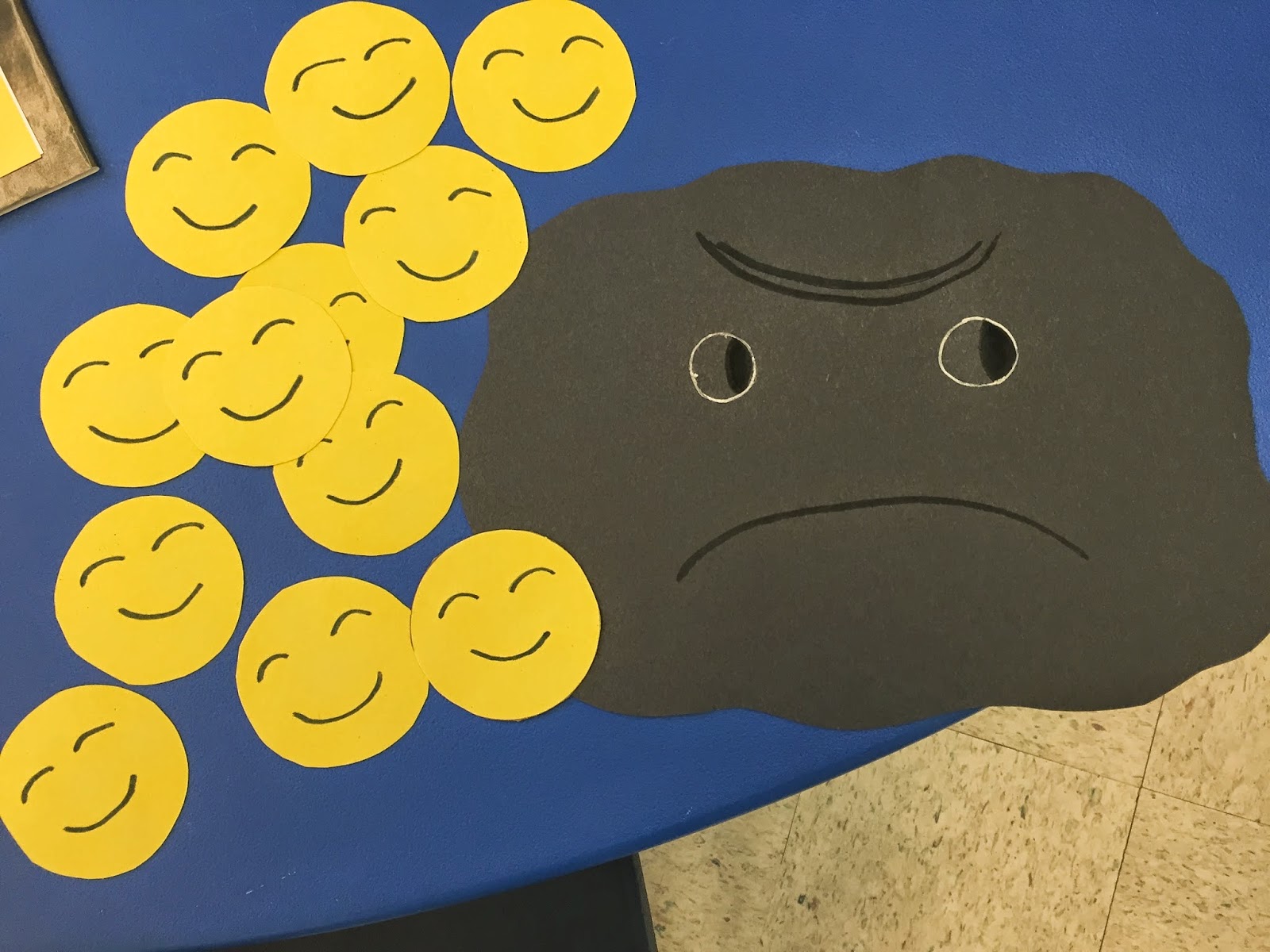
Activity:  Use black construction paper to cut out a cloud.  I used a marker to write the grouchie’s saying on the back.  Hand out several yellow smiley faces to each student.  Prompt students to write a positive thought on each smiley face and to then use those smiley faces to cover up (beat) the grouchies.   

I have students write a few of their own positive thoughts and then we write a positive thought to replace each negative thought from story: 
Examples:
"I hate oatmeal" is replaced by "my mom must care about me since she is making me breakfast"           
"My sister is having a party without me" is replaced by "maybe my sister will let me play with her"           
"My sister took my bear without asking" is replaced with "I have more toys that I can play with"               
"This puzzle is impossible" can be replaced with "I can do this if I really try"
"I don’t want to dry the dishes" can be replaced with "I get to spend time with my dad while we do the dishes"


Thursday, January 29, 2015

Dragons

I have some difficulty finding good books for boys, so when I saw You've Got Dragons I took a chance and ordered it.  And I love it!  Boys don't always want to admit that they are worried about something.  In this book, a boy pictures his problems as dragons.  Before I read the story I make it very clear that whenever the word "dragon" is used, the boy is talking about a problem that he has.  My students don't have any problem catching on to the concept of the story and after we read it they are ready to tell me about their own problems.  In fact, last week we had a student who was refusing to speak.  He was sent to my room where he remained silent.  Finally, I pulled out this book and read it to him.  I allowed him to make his own dragon and before I knew it he was talking to me!  


Lesson 1:  
We read the story and discuss the character's problems.  
Discussion questions:  What are 3 ways that Ben tries to get rid of his problems? 
Do those strategies work?  Why or Why  not?  What is Ben worried about at the end of the book?  How does Ben finally get rid of his problem?  


Lesson 2:  
Students get the opportunity to draw their own dragon.  They also name their dragon.
Discussion questions:  Tell me about the size of your dragon.  Tell me about the color and details of your dragon.  How did you name your dragon?  What problem does your dragon represent?


Lesson 3:  
Students talk about how they are going to conquer their own dragon.  I let students be as silly as they want about conquering their dragon.  We then go back to the problem that the dragon represents and take some time brainstorming ways to manage the problem.  I also have students write there own tips for dealing with Dragons.  The character in the story gives four "top tips" for dealing with dragons so I encourage students to come up with at least four tips of their own.  

Lesson 4:
In the story, the main character, Ben, answers questions in the format of an advice column.  I decided to create a student worksheet where they get the chance to solve some of Ben's problems.You can get that here:  Advice Column  


****I have also let students make their dragon out of playdough and then smash it at the end of the session.