Friday, December 16, 2016

Being Wendy (Careers)

I recently ordered the book Being Wendy and have been using it to plan career lessons for my 1st grade classrooms.  Last year I used Career Critters but I felt like it would have been more suitable for my kindergarten students.  Being Wendy is great because you can tie in some lessons on self-acceptance and diversity as well.  
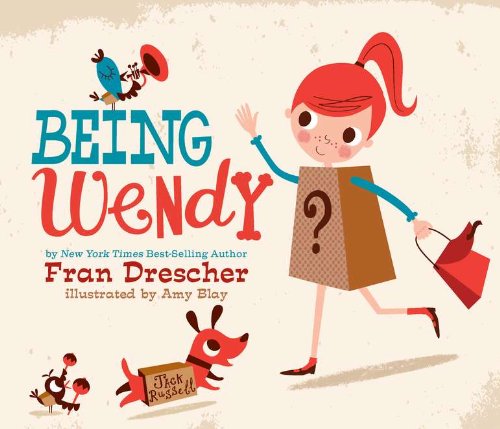
Image result for being wendy

Book Description:  Wendy lives in an odd town where everyone has to wear a box. These boxes are labeled with what each person does. The teacher wears a TEACHER box. The baker wears a BAKER box. Even the doctor wears a DOCTOR box! These boxes are worn for life and Wendy has to choose hers soon. How will she ever decide on just one box? She's interested in so many things! Wendy's moxie makes her break out of her box . . . And she sets the whole town on end when she does!

Connections:
Ms. Sepp's Counselor Corner posted some great discussion questions as well as a craftivity to go along with the story.

The Corner On Character also shared some great ideas about "thinking outside the box".

If you want a lesson for older students (3-4) you could use this lesson: schoolcounseling.weebly

http://www.sparksinslp.com/blog/thinking-outside-the-box

Being Wendy Prezi


Friday, December 9, 2016

Snowflake Bentley (Perseverance)

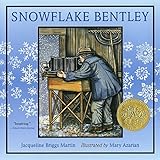
Snowflake Bentley is a biography about the life of Wilson Bentley, a self-taught scientist who photographed thousands of snowflakes and studied their uniqueness.  While other children built forts and pelted snowballs at roosting crows, Willie used an old microscope to look at flowers, raindrops, blades of grass, and snow.  Willie's parents bought him a camera that made it possible for him to photograph the snowflakes.  His first pictures were failures but mistake by mistake, snowflake by snowflake, Willie worked through every storm.  Even though Willie didn't give up, that winter ended and he still wasn't able to accomplish his goal.  He finally accomplished his goal the second winter, but he still faced obstacles.  Sometimes the snowflakes were broken and he had to wait hours before finding one that was just right.  If the shed was warm, the snow would melt.  If he twitched a muscle, the snowflake would break.  If he didn't work carefully and quickly the snowflakes would evaporate.  Willie's work was greatly respected near the end of his life.  He came to be known as the world's expert on snow and other scientists raised money to help him publish his book.   I have used this book to teach two different lessons.  The first lesson is on Diversity and the second is on Perseverance.  You can purchase the book HERE.
Product Details
Connections:
I love this folded flap book by Buzzying with Ms. B. for teaching perseverance:

Snowflake Diversity on TPT by Morgan Warwick (includes a lesson and worksheet)


TPT Freebie: Snowflake Diversity (links to activities by subject)


Related Posts:


Friday, November 18, 2016

School Counseling with ClassDojo Big Ideas (Mindset, Perseverance, Empathy)

I've been using ClassDojo for about 9 months now and I think it is one of the best FREE resources that I have found.  You just create an account and you have access to some great teaching tools.  I had been using ClassDojo to teach students about Mindset and then they came out with the Perseverance series and most recently the Empathy series.  I use these short video clips ALL THE TIME and students LOVE them.  You can check it out HERE.
Growth Mindset (5 videos in the series plus 2 activities)


Perseverance Series (3 videos in the series plus a follow up activity)

Empathy Series (3 videos in the series plus a follow up activity)

Be sure to check out the resources page for posters, coloring pages, etc....  This may be more useful for classroom teachers but there are a few things that I have printed off:)

School Counseling with ClassDojo Big Ideas (Mindset, Perseverance, Empathy)

I've been using ClassDojo for about 9 months now and I think it is one of the best FREE resources that I have found.  You just create an account and you have access to some great teaching tools.  I had been using ClassDojo to teach students about Mindset and then they came out with the Perseverance series and most recently the Empathy series.  I use these short video clips ALL THE TIME and students LOVE them.  You can check it out HERE.
Growth Mindset (5 videos in the series plus 2 activities)


Perseverance Series (3 videos in the series plus a follow up activity)

Empathy Series (3 videos in the series plus a follow up activity)

Be sure to check out the resources page for posters, coloring pages, etc....  This may be more useful for classroom teachers but there are a few things that I have printed off:)

Power Cards

I recently attended a really great workshop on Autism.  I came back to work with a lot of really great ideas and began implementing them right away.  The one strategy that has been really effective has been the Power Card Strategy.  Since children with Autism tend to have areas of high interest, this strategy can be very powerful.  A Power Card includes a short script of the student's interest combined with the issue at hand.  The Power Card should also include a picture and a solution to the problem broken into 3-5 steps.  The card is then laminated and the student can tape it to their desk or carry it around with them.  I have already created two Power Cards and they have been very successful thus far.  Here are the cards that I created:

Anthony Rizzo is a baseball player for the Chicago cubs.  
Sometimes Rizzo gets frustrated.  If Rizzo loses his cool 
the umpire will throw him out of the game. 
  Rizzo must keep his cool for the entire game.  
You must keep your cool for the entire school day.  
When Rizzo gets frustrated he:

1.       Takes a deep breath
2.       Says “it’s okay”
3.       Keeps working hard

You can be like Rizzo!


Metagross’s main ability is his intelligence.  He has four brains 
so he is capable of difficult math calculations and
 he is smarter than a super computer.  Metagross needs to work hard 
and use his brains so that he can analyze his opponents 
during battle.  If Metagross doesn’t do his best work 
and use his intelligence, he will not defeat his opponent.  
When Metagross doesn’t feel like doing his best work, he does the following:

1.      Think, I am smart enough to beat my opponent (assignment).
2.      Think, I will feel victoious when I defeat the opponent (assignment).
3.      Think, once I beat all of my opponents (assignments), I can earn free time.
You can be like Metagross!

Connections


Tuesday, November 8, 2016

Trustworthiness: Sarah's Little Ghosts

One story that I use to teach lessons about lying is Sarah's Little Ghosts.  
Product Details
Description from Amazon:  When Sarah breaks her mother's favorite necklace,  she lies to cover it up.  but the lie isn't the only thing that comes out of her mouth.  A little ghost pops out, too!  and for every new lie Sarah tells, another ghost appears.  There seems to be only one way to get rid of them, but which is scarier:  living in your own haunted house, or telling the truth?

The ghosts in this story represent Sarah's conscience.  The ghosts say the words that Sarah should be saying instead of the lies that she tells-"I broke your necklace"!  The ghosts are a great representation of the guilt that a child feels when lying.

Connections:
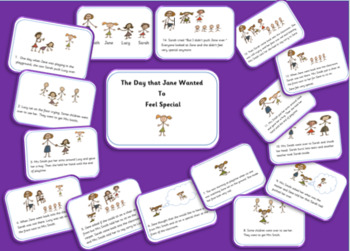
Social Story about telling the truth

Conscience Powerpoint


Positive Post-it Day

My 5th grade students just finished celebrating Positive Post-it Day.  If you haven't heard of Positive Post-it Day you can read about the student who created it HERE.  You can also watch the YouTube video HERE.  I plan to have a school-wide postive post-it day next year but started with the fifth graders this year.  

Positive Post-it Day can be done with any grade level.  The Kindergarten Smorgasboard shared here lesson HERE.

Image result for post it notes locker

My Lesson:
1.  Give each student a class roster (or write each student's name on the board).
2. Give each student a pack of post-it notes.
3.  Have students write a positive message on each note.  I asked students to write messages that would be meaningful to each specific student so we did include names in the messages.
4.  Allow students to place post it notes on lockers.
5.  Give students time to return to their own locker to read the messages their classmates wrote to them.
6.  Students leave their post-it notes on their lockers until the end of the school day when they can remove them and take them home with them.

I had a lot of positive feedback after this lesson.  Some of the students were really surprised by their classmates comments:)