Thursday, March 24, 2016

Handling Disappointment (You Get What You Get)

You Get What You Get is a cute book to use when reinforcing the idea that it is not okay to throw a fit when you don't get your way.  I use this story with my kindergarten students and it is a big hit. The story starts out by introducing us to Melvin, a squirrel who doesn't handle disappointment well.  Melvin has a meltdown whenever he doesn't get his way.  He throws a fit when his sister gets more chocolate chips in her cookie.  He throws a fit when he loses his turn during a game.  He throws a fit when he doesn't get the backpack that he wanted.  However, Melvin's teacher has a rule in her classroom:  You get what you get and you don't throw a fit!  Because of this rule Melvin can't throw a fit when he has to use crayons instead of markers or when he ends up last in line or when he gets a pink napkin instead of a green one.
Product Details
How I use this book:  I read the story aloud to students.  As I read I point out how Marvin's behavior affects other characters in the story:  his friends look confused, his sister looks annoyed, his mom looks angry.  After reading the story we talk about strategies that Marvin could have used to calm down.  I then give each student an acorn and have them complete the sentence "I may not get what I want when..."


 You can purchase You Get What You Get HERE.


More Connections:

Social Skill; Dealing with Disappointment; Coping Strategy; CBT

Follow Counseling Connections on Facebook!

Tuesday, March 22, 2016

Perseverance

I recently stumbled accross the Ormie the Pig shortclip and thought it would be perfect for teaching a lesson on perseverance.  Ormie is a pig that has found a jar of cookies on top of a refrigerator .
Ormie the Pig
Image result for ormie the pig


Image result for ormie the pig perseverance

Lesson:  
1.  Have students fill out the Perseverance Questionnaire by ELAtime (Free on  TPT).
2.  Write the word Perseverance on the board.  Ask students what the word means.
3.  Lead a class discussion:   Have you ever tried something and failed?  How did you feel?  How did you handle that situation?  Tell me about a time that you tried really hard and persevered.  How did you feel?
4.  Show the Ormie the Pig Short: Ormie the Pig
5.  Use the following worksheet to talk about Ormie's thoughts and feelings:  Ormie the Pig Feelings
Ormie the Pig Inferencing + Perspective Taking
6. Discussion:  What did Ormie want?  What were some of the different strategies that Ormie tried.  How did Ormie feel when he failed?  Did Ormie give up?  Would you have continued trying as long as Ormie did?  What would you have done to try to get to the cookies? Do you think Ormie will ever try that hard again?  What can we conclude based on what we know about Ormie?How do you think he will get the jar off of his head?  How can we relate this to mindset?
7.  Wrap-Up:  When we are feeling like a problem is too hard to solve, we need perseverance to keep trying until we find a solution to the problem.

Follow Counseling Connections on Facebook!


Monday, March 21, 2016

Mindfulness Monday (Pebble Breathing)

I recently ordered the book A Handful of Quiet:  Happiness in Four Pebbles, by Thich Nhat Hanh. This book has been a great tool for teaching mindful breathing.  The pebbles give children a tangible way to return to their breath and connect with the world around them.  All you need for this exercise is a piece of paper for each student, 4 pebbles per student and a quiet spot.  Each pebble in the story represents a different image and quality:  the freshness and beauty of a flower, the solidity of a mountain, the calmness of water, and the freedom of space.  Breathing in and out, students will pick up one pebble at a time and see themselves as that image.  There is a PDF from Mindful Kids that describes pebble breathing HERE.  I used the Pebble Meditation Practice Worksheet and  I downloaded the pebble mediation cards and laminated them for students.


Product Details

You can purchase A Handful of Quiet:  Happiness in Four Pebbles HERE.


Follow Counseling Connections on Facebook!

Wednesday, March 16, 2016

ONE (bullying and bystanders)

I odered the books ONE and Zero a few months back and finally got around to using ONE of them. I had heard a lot about these books but I was still pleasantly surprised with the powerful message behind ONE.  If you don't already have this book in your counseling library I would definitely recommend it!  ONE has a great message of inclusion, empowerment, and tolerance.  This book does a great job of teaching elementary students the power of ONE person.  In the story, Blue is the quiet, passive color who is bullied by hot headed Red.  The other colors are bystanders, who don't like the way Red it treating Blue, but don't stand up for him.  Every time Red bullies Blue and no ONE speaks up, Red grows larger and more powerful.  Finally, the number ONE stands up to Red and teaches all of the colors that everyone counts.
Product Details
You can purchase ONE HERE.
You can find three different lessons to go along with ONE at welcomingschools.org.  You can find discussion questions to go along with ONE and ZERO HERE and worksheets to supplement the story HERE. There is also a fun demonstration using food coloring HERE.


Worksheet Supplement to "One" by Kathryn Otoshi

Sometimes it just takes ONE


Being an Upstander: When and How to Stand Up to Bullying
Follow Counseling Connections on Facebook!

Tuesday, March 15, 2016

A lesson on friendship

One of the books that I use in small groups is The Sandwich Swap.  The Sandwich Swap leads to great discussions on how we can be different, but still be friends.  The story is about two girls who are best friends, but that friendship is tested when each girl tells the other that her lunch seems gross. Salma and Lily come from different cultural backgrounds and their lunches reflect that they have differences. The Sandwich Swap is a great reminder that we need to embrace and appreciate each other's differences.  If you want to use this book in a classroom setting you can find an entire lesson plan along with scenarios at Read4Health.  You can also find a script for a skit along with some other lesson ideas HERE.  I especially like the writing part where you have students write about a time where they thought they weren't going to like something but ended up liking it after they tried it.
Product Details
You can purchase The Sandwich Swap HERE.

Description from Amazon:  Lily and Salma are best friends.  They like doing all the same things, and they always eat lunch together.  Lily eats peanut butter and Salma eats hummus-but what's that between friends?  It turns out, a lot.  Before they know it, a food fight breaks out.  Can Lily and Salma put aside their differences?  Or will a sandwich come between them?  The smallest things can pull us apart-until we learn that friendship is far more powerful than difference.  In a glorious three-page gatefold at the end of the book, Salma, Lily, and all their classmates come together in the true spirit of tolerance and acceptance.

Connections:
I haven't used this lesson yet but plan to download it and use it to go along with The Sandwich Swap.  I love that you create PB&J friendwiches while learning about important friendship traits and that yucky toppings (gets jealous bacon, has a bad attitude lettuce, gives put downs onion, etc...) ruin the sandwich.  You can get it for $4.80 on TPT and it is 67 pages long, including a game and a bulletin board idea!
Friends Stick Together Like Peanut Butter and Jelly

You could also download the FREE PRINTABLE SANDWICH from http://kidsactivitiesblog.com and have students write friendship traits on each piece of the sandwich.


This Friendship Venn Diagram with questions would be a great tool for talking about diversity among classmates:
Friend Venn-Diagram

Here is another Friendship Venn Diagram:
Friendship Venn Diagram

There is a fun activity in this Free TPT product:  Book It: Retell It, Write It, Make It!.  Students can work together to see how many words they can make out of "sandwich swap".
Book It: Retell It, Write It, Make It! (The Sandwich Swap)

This would be a good worksheet to hand out prior to reading the story.  Students could fill it out as the story is read:
Listening & Making Predictions FREEBIE Activity - "The San
Follow Counseling Connections on Facebook!


Peace Day

Apparently International Peace Day is celebrated around the world on September 21st and I missed the memo!  I will be celebrating Peace Day with my students when we get back from Spring Break and I have found a lot of cute ideas!  

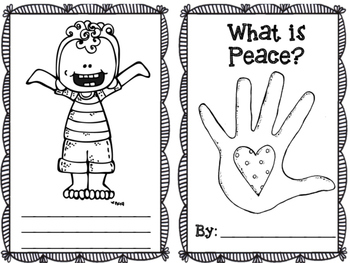
Kindergarten:  We will be reading The Peace Book by Todd Parr.  I love Todd Parr books and this one is awesome!  I think I will be having the kindergarten students create a class book about Peace.  I really like this idea from The Kindergarten Teacher's Blog.
Product Details
This would be another cute idea for Kindergarten and it is free on TPT:

Peace Day

1st Grade:  We will be reading Peace Week in Miss Fox's Class.  Miss Fox is tired of hearing her students argue so she announces Peace Week.  The students help Miss Fox come up with rules for the week:  no fighting; don't say mean things, and help others.  Throughout the week the students in Miss Fox's class practice these new behaviors.  Soon the students realize that it's easy to help others, take turns, and say nice things.  
Product Details

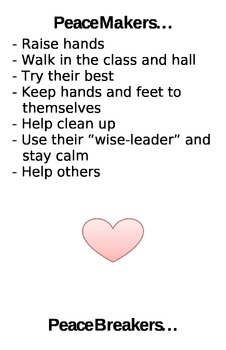
After reading I plan to discuss the book and then brainstorm with the class how they can be peacemakers.

I also love this idea from First Grade Parade:
[peacemakers1%255B6%255D.jpg]

Or you could use these free printables from TPT:
Classroom Management: Peace Makers & Peace Breakers

2nd Grade:  We will be reading What Does Peace Feel Like?  What does the word PEACE really mean?  Ask children from around the world, and this is what they say...
Product Details

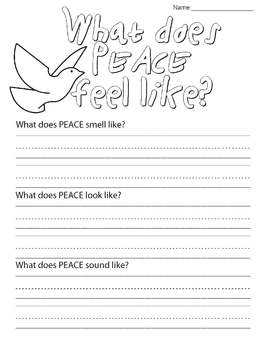
I downloaded this worksheet for free on TPT and plan to have student fill it out:
What does peace feel like
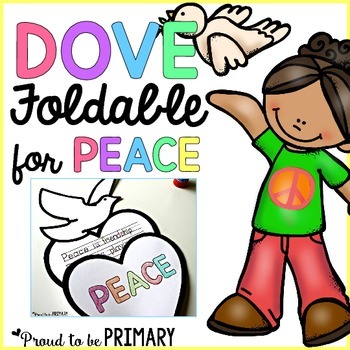
I then plan to have students do this craftivity (free on TPT):
Peace Foldable Craftivity

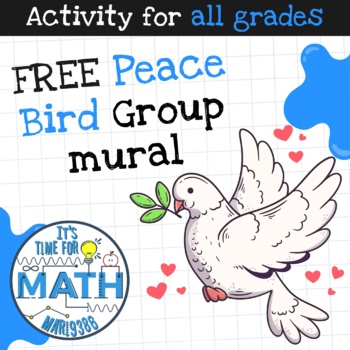
I am loving this Mural idea and may incorporate it in my lesson as well:
Peace Bird - Group mural
I also like this idea from No Time For Flashcards:

3rd Grade:  My 3rd graders will be doing some of the activities from the YMCA's packet of PEACE WEEK ideas.  
011


I'm also considering doing these Peace Plates from gradeonederful.com:

4th Grade:  My fourth graders will be doing some lessons from This link:  Peace Day Ideas along with a lesson from Color and Collage:

This is an art lesson so I will be taking the art teaching bit out of it and will focus on the meaning of the word PEACE.  Students will create their Peace sign out of clay and will attach an tag with their name and a sentence about PEACE and what that word means to them.

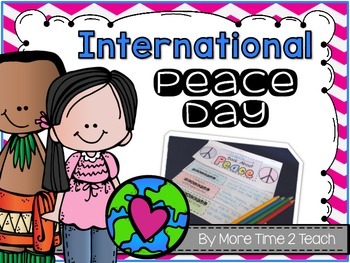
I may use this free activity from TPT as well:
International Peace Day {FREEBIE}


5th Grade:  My fifth graders will also be doing a lesson from Color and Collage:
This lesson focus on friendship and understanding for each other's differences and backgrounds.  The lesson consists of each student receives a piece of paper with a language, countries the language is spoken in, and the word for friend in that language.  Each student then folds a piece of paper in half and uses their word for friend to design the front part of the paper.  They also fill out a slip of paper that is attached to the inside.  Check out the blog post for more details!

More Connections:
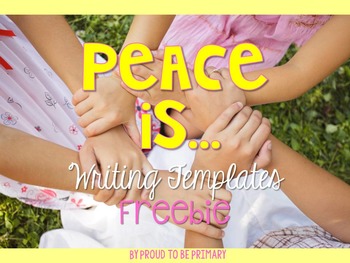
Peace Writing


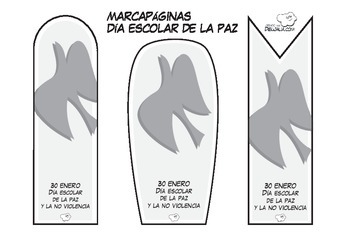
Bookmarks and templates for Peace Day

Follow Counseling Connections on Facebook!


Monday, March 14, 2016

Mindfulness Monday (glitter jar)

Mindfulness sessions are used to help raise children's awareness of the here and now.  This awareness helps them cope better with their thoughts and their emotions.  One example of a mindfulness exercise is the use of a glitter jar.  The glitter is used as a metaphor for our thoughts and feelings.  

Directions:  Shake the glitter globe and explain that when our minds are racing, our thoughts are like these beautiful bits of glitter swirling all around.  Then encourage students to watch the glitter settle to the bottom and to allow their thoughts and feelings to do the same.  Explain that when we are still and focus on our breath we can allow our minds to calm down.  This helps us to see "clearly".  

You can find directions for making your own mindfulness jar at mindwisetherapy's blog:
Mindfulness bottles - also referred to as calming jars, mind jars, or glitter jars.

Moody Cow is a great book to go along with this lesson on Mindfulness:
Product Details


Follow Counseling Connections on Facebook!