Showing posts with label conflict resolution. Show all posts

Tuesday, March 15, 2016

Peace Day

Apparently International Peace Day is celebrated around the world on September 21st and I missed the memo!  I will be celebrating Peace Day with my students when we get back from Spring Break and I have found a lot of cute ideas!  

Kindergarten:  We will be reading The Peace Book by Todd Parr.  I love Todd Parr books and this one is awesome!  I think I will be having the kindergarten students create a class book about Peace.  I really like this idea from The Kindergarten Teacher's Blog.
Product Details
This would be another cute idea for Kindergarten and it is free on TPT:
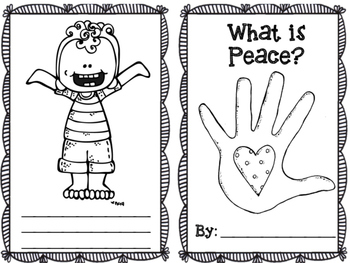
Peace Day

1st Grade:  We will be reading Peace Week in Miss Fox's Class.  Miss Fox is tired of hearing her students argue so she announces Peace Week.  The students help Miss Fox come up with rules for the week:  no fighting; don't say mean things, and help others.  Throughout the week the students in Miss Fox's class practice these new behaviors.  Soon the students realize that it's easy to help others, take turns, and say nice things.  
Product Details

After reading I plan to discuss the book and then brainstorm with the class how they can be peacemakers.

I also love this idea from First Grade Parade:
[peacemakers1%255B6%255D.jpg]

Or you could use these free printables from TPT:
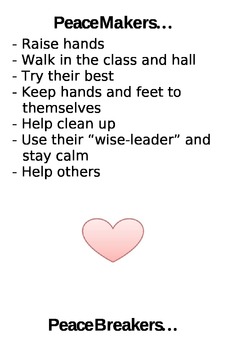
Classroom Management: Peace Makers & Peace Breakers

2nd Grade:  We will be reading What Does Peace Feel Like?  What does the word PEACE really mean?  Ask children from around the world, and this is what they say...
Product Details

I downloaded this worksheet for free on TPT and plan to have student fill it out:
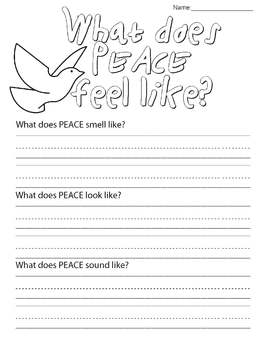
What does peace feel like
I then plan to have students do this craftivity (free on TPT):
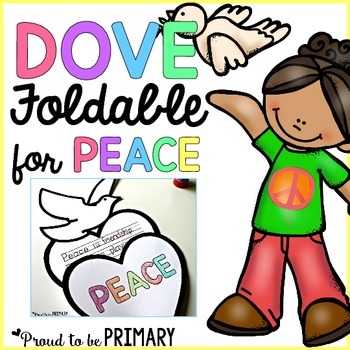
Peace Foldable Craftivity

I am loving this Mural idea and may incorporate it in my lesson as well:
Peace Bird - Group mural
I also like this idea from No Time For Flashcards:

3rd Grade:  My 3rd graders will be doing some of the activities from the YMCA's packet of PEACE WEEK ideas.  
011


I'm also considering doing these Peace Plates from gradeonederful.com:

4th Grade:  My fourth graders will be doing some lessons from This link:  Peace Day Ideas along with a lesson from Color and Collage:

This is an art lesson so I will be taking the art teaching bit out of it and will focus on the meaning of the word PEACE.  Students will create their Peace sign out of clay and will attach an tag with their name and a sentence about PEACE and what that word means to them.

I may use this free activity from TPT as well:
International Peace Day {FREEBIE}


5th Grade:  My fifth graders will also be doing a lesson from Color and Collage:
This lesson focus on friendship and understanding for each other's differences and backgrounds.  The lesson consists of each student receives a piece of paper with a language, countries the language is spoken in, and the word for friend in that language.  Each student then folds a piece of paper in half and uses their word for friend to design the front part of the paper.  They also fill out a slip of paper that is attached to the inside.  Check out the blog post for more details!

More Connections:

Peace Writing


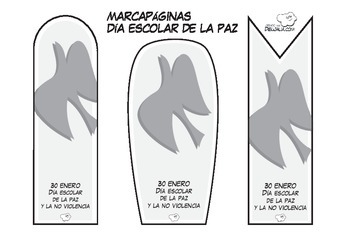
Bookmarks and templates for Peace Day

Follow Counseling Connections on Facebook!


Thursday, March 3, 2016

Friendship Behaviors with The Recess Queen

The Recess Queen is a great book to use to talk about friendship behaviors.  If you don't have this book you should definitely consider adding it to your resources.  There are a ton of great lesson ideas on TPT.  I have made connections to my favorite FREE ones below.

Product Details

Mean Jean dominates the playground.  Everyone is afraid of Mean Jean.  "Nobody swung until Mean Jean swung. Nobody kicked until Mean Jean kicked.  Nobody bounced until Mean Jean bounced."  Mean Jean is scary and and nobody plays with her.  But when Katie Sue, a teeny girl, moves in she changes everything.  Mean Jean stops yelling and bossing and pushing and bullying and learns to play with the other kids.   You can purchase The Recess Queen HERE.


Free Connections:  All of these resources are FREE on TPT:
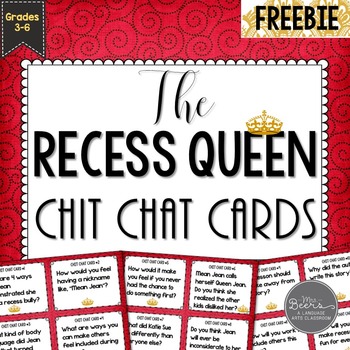
The Recess Queen Chit Chat Cards FREEBIE for Grades 3-6

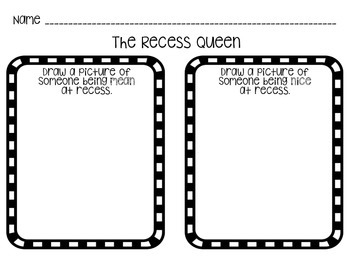
The Recess Queen [Freebie]

The Recess Queen

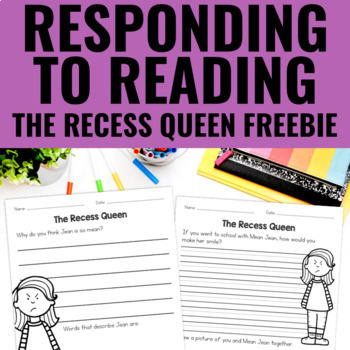
The Recess Queen - Reading Response FREEBIE

Mean Jean the Recess Queen Character Traits Compare and Contrast


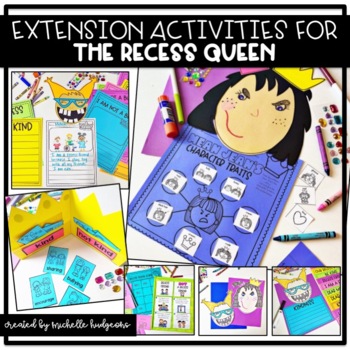
I also purchased this Craftivity ($4.00)
The Recess Queen {14 graphic organizers & 2 craftivities}

Product Details

Related Posts:

Follow Counseling Connections on Facebook!


Tuesday, September 29, 2015

Spaghetti in a hot dog...Having the Courage to Be Who You Are

Yesterdays post was about one of my favorite bullying books, The Juice Box Bully.  You can read that post HERE.  I mentioned that The Juice Box Bully is a follow up to Spaghetti in a Hot Dog Bun.  I use Spaghetti in a Hot Dog Bun to talk about problem solving with my second graders.  We put Kelso's choices on hot dog buns and discuss how Lucy could have used each choice to solve her problem with Ralph.  Here are our hot dogs:


This is a great book to use in individual/small group/classroom counseling lessons.  I have used it to talk about courage, self-esteem, problem solving, bullying, respect, diversity, kindness, friendship, conflict resolution, etc...  I also love that this book comes with a reader's guide full of lesson ideas.  I have connected Spaghetti in a Hot Dog Bun to several activities which are outlined below.
Description from Amazon:  How can Ralph be so mean?  Lucy is one of a kind and Ralph loves to point that out.  Lucy's defining moment comes when Ralph truly needs help.  Because she knows what she stands for, Lucy has the courage to make a good choice.  This charming story empowers children to always do the right thing and be proud of themselves, even when they are faced with someone as challenging as Ralph.

Reader's Guide

Lesson Ideas and Comprehension Questions

Spaghetti in a Hot Dog Bun Venn Diagram

Compare yourself to a friend activity

Recipe for Spaghetti in a Hot Dog Bun

Diversity Lesson to go along with Spaghetti in a Hot Dog Bun

A Lesson on Kindness

Unique...That's Me! Activity and Lesson


Tuesday, September 15, 2015

A Bug and a Wish (conflict resolution and problem solving)

I use A Bug and a Wish to teach elementary students to problem solve using I-Statements.  The I-Statements are replaced by saying "It BUGS me when you tease me, and I WISH you would stop.

Description from Amazon:  When Tyler is teased by the other boys, his good friend, Danae, encourages him to give the boys A Bug and a Wish.  When Tyler finds a ladybug and a dandelion seed, he is convinced that this is what Danae means.  As his friends help him to learn the true meaning of her advice, Tyler soon discovers the solution to his problem.

Counseling Connections for A Bug and a Wish

Activity to go along with A Bug and a Wish

A bug and a wish conflict resolution cards

Friendship Bugs by creative elementary school counselor

A bug and a wish classroom poster

It bugs me when...(craft idea) +when something is bugging me I can say...

A bug and a wish cut-out

What do I do that bugs others?

Lesson Plan

Lesson Idea

A Bug and a Wish...Dealing with Tattling

TPT: Citizen Pack with A Bug and a Wish


Tuesday, August 18, 2015

Simon's Hook: Dealing with Teasing

Simon's Hook is a fantastic story about teases and put-downs.  Students learn several different ways to respond to teasing.  I use this book with my 3rd grade students during their classroom lessons.


Simon's Hook description from Amazon:  Simon is having a bad day; a bad hair day.   First his sister gives him a strange hair cut, then his friends tease him. Simon doesn't know what to do.  Lucky for him he runs into Grandma Rose.  After listening to his sorrowful story she helps him learn an important life lesson; how to handle teases and put downs.  By comparing teases to fishing hooks she tells him a tale of how fish learned not to bite.  With fanciful characters such as Harmony Hippy Fish, Freddie Fang, Max the Mouse Fish and more, Simon learns that he, too, can swim free from the teasing hooks that people toss his way.  

I love these posters, bookmarks and lanyards HERE.


Lesson Connections:

Responding to Teasing and Putdowns (This is my favorite lesson)

Lesson Plan from The Inspired Counselor

Paper Fish Strategies from The Crafty Counselor

Beware of Bait Game Idea

Craft Idea...Have students write a strategy on the fish!

Simon's Hook Activities

Lesson Plan Outline

Story: The Smart Fish (don't take the bait)

Bulletin Board Idea

Online Quiz and Diploma

Here is an idea for centers.  If you know the original source please share.  I can only find this picture and it doesn't link to anything.  

TPT:  Self Esteem Activity: Put Ups and Put Downs (FREE)

TPT:  Free Classroom Poster

TPT:  Activities to teach students how to respond to teasing

TPT:  Don't Bite the Bait: Responding to Teasing and Put-Downs


You Can Purchase Simon's Hook HERE.


Personal/Social Development ASCA National Standards: 
Standard A: Students will acquire the knowledge, attitudes and interpersonal skills to help them understand and respect self and others. 
PS:A1.6 Distinguish between appropriate and inappropriate behavior 
PS:A1.8 Understand the need for self-control and how to practice it 
PS:A1.9 Demonstrate cooperative behavior in groups 
PS:A2 Acquire Interpersonal Skills
PS:A2.2 Respect alternative points of view 
PS:A2.6 Use effective communications skills 
PS:A2.7 Know that communication involves speaking, listening and nonverbal behavior 

Standard B: Students will make decisions, set goals and take necessary action to achieve goals. 
PS:B1.1 Use a decision-making and problem-solving model 
PS:B1.2 Understand consequences of decisions and choices 
PS:B1.3 Identify alternative solutions to a problem 
PS:B1.4 Develop effective coping skills for dealing with problems
PS:B1.5 Demonstrate when, where and how to seek help for solving problems and making decisions 
PS:B1.6 Know how to apply conflict resolution skills 


Standard C: Students will understand safety and survival skills. 
PS:C1.5 Differentiate between situations requiring peer support and situations requiring adult professional help 
PS:C1.7 Apply effective problem-solving and decision-making skills to make safe and healthy choices 


Thursday, February 12, 2015

Spreading Rumors

One of the books that I use to introduce the topic of rumors is She Said What About Me?   

The main character in She Said What About Me? discovers that her "friend" has told lies about her. She can't understand why her friend would do this and becomes so upset that she doesn't want to go to school.  She ends up talking to her parents who bring her to talk to the school counselor.  With their help, she decides to talk-it-out with her "friend".  

I like this book for several reasons:
1.  I love that the school counselor is involved.  This story is a great reminder that students can go to their school counselor for help.
2.  I love that the girls "talk-it-out".  I use the Kelso's choice curriculum and this is one of the 9 ways to solve a problem.
3.  The story shows how hurtful it is when someone spreads rumors.
4.  I like that the girls are able to repair their friendship.
5.  There are 12 discussion questions at the back of the book.

Activities:
Telephone:  We play the traditional game of telephone to show how a message can change as it is passed from one person to another.  I usually pull one student into the hall and tell them a simple message.  I instruct them to return to the classroom to whisper it in the next person's ear.  The process continues until the "rumor" has been spread to each student in the classroom.  The last person announces the message as they heard it.  The final message definitely changes after it goes through a class of 15-20 kids!  

Toothpaste:  Start by telling students that they will each squeeze a large amount of toothpaste onto a paper plate.  Explain that each glob of toothpaste represents a rumor coming out of their mouth. Once the toothpaste tube is empty ask for a student volunteer.  Instruct this student to put the toothpaste back in the tube.  Obviously, the student will not be able to put the toothpaste back in.  This can lead to a great discussion about the power of words and how words can't be taken back once they are spoken.  Once a rumor is out there, damage has been done and we can't undo it.  We also talk about how easy it was to spread the rumor (squeeze out the toothpaste), but impossible to take the words back (put the toothpaste back).

Posters:  Each student can pick a topic and make a poster to hang in the wall or in the classroom. (idea from the back of the book).


For Small Groups: A coworker recently recommended the book, The Drama Llama.  This book includes a story as well as worksheets/activities.  

Another great book about spreading rumors is The Secret that Olivia Told Me.  

You could also use the She Said What About Me Card Game.  I don't own this game but it looks like it would be good for a small group setting.  

More lessons on rumors/gossip can be found here:

Don't Spread Rumors

Monday, March 11, 2013

Stand Tall, Molly Lou Melon

One of my favorite counseling books is, Stand Tall, Molly Lou Melon, written by Patty Lovell and illustrated by David Catrow.  It can be used for so many different topics:  bullying, self-esteem, confidence, conflict resolution, overcoming obstacles, respecting differences, etc...


Molly Lou Melon is the shortest girl in the first grade.  She has buckteeth and several other traits that make her different.  Her grandma told her, “Walk as proudly as you can and the world will look up to you". Taking her grandmother’s advice, Molly Lou doesn't worry about being different at her new school.  She deals with the school bully by showing him that her faults are actually talents.


I found several great lesson plans online that I will share:
Stand Tall Molly Lou Melon- lessons FREEBIE

Free Worksheet

http://www.bedford.k12.mi.us/~mre/Book%20of%20the%20Month%20pdfs/bommollylou.pdf

http://literacyinstructions.wikispaces.com/Making+Inferences+About+Characters+(Grade+3-5)

http://www.spokenartsmedia.com/StudyGuides/Stand%20Tall.pdf


Vocabulary:
alongside:  side by side
boa constrictor:  a snake covered with spots
proudly:  having or displaying excessive self-esteem or being proud of yourself
foolish:  lacking good sense or judgement (silly)
glee:  high spirited/joy
revealed:  to make known or to show something
bully:  A person who uses strength or power to harm or intimidate those who are weaker.
unique:  Being the only one of its kind; unlike anything else
flaw:  An imperfection
strength:  being strong
fumble:  to drop something
glee:  happiness

Questions:

Before Reading:

  • Looking at the cover, what do you notice about Molly Lou?
  • What do you think this story is about?
  • What do you think "Stand Tall" means?
  • Have you ever had a time when someone was not nice to you?
  • Have you ever been called names because people thought you were different?
  • How did that make you feel?
  • How did you solve the problem? (we talk about using Kelso's Choices here) http://kelsoschoice.com/

While Reading/After Reading:

  • What made Molly Lou different from her classmates? (use pictures in story for reference)
  • What advice did Molly Lou's grandmother give her?
  • What did Molly Lou do when Ronald picked on her?
  • How did Molly Lou feel about herself?  How do you know?
  • How did Molly Lou “stand tall”?
Follow-up Activities:

  • Common Core encourages cooperative learning. Pair students and have them interview each other in order to find unique facts about one another.
Common Core Connection:
CCSS.ELA-Literacy RL.1.3  Describe characters, settings, and major events in a story, using key details.

CCSA.ELA-Literacty.RL.1.1 Ask and answer questions about key details in a text

CCSS.ELA-Literacy.RL1.7 Use the illustrations and details in a text to describe its key ideas


ASCA Standards:

A1.1  Develop positive attitudes toward self as a unique and worthy person
A2.3 Recognize, accept, respect and appreciate individual differences
A2.6 Use effective communication skills
B1.3 Identify alternative solutions to a problem
B1.4 Develop effective coping skills for dealing with problems
B1.6 Know how to apply conflict resolution skills