Showing posts with label social work. Show all posts

Monday, November 27, 2017

Mindset Monday-Someday

 I recently purchased the book Someday by Eileen Spinelli.  Someday is a cute story about a girl who dreams about becoming something great.  I like this story because it starts with the girl telling about her goals for the future and follows up with something that she is doing now that is related to that goal.  This would also be a good book for discussions about careers, goal setting, dreams, etc...   I plan to use the book to teach students to use a growth mindset and found several great connections:

Growth-Mindset-lesson-using-book-Someday-by-Eileen-Spinelli (FREE)

Someday, writing to accompany Eileen Spinelli's amazing book!

Teaching Elements of Fiction Using Mentor Text "Someday" + Icebreaker Activity by Amy Mezni ($3.00)
2 great activities for counseling:  making a someday book and writing down goals/dreams.
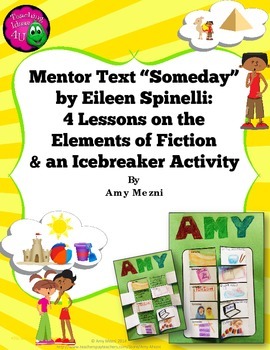
Teaching Elements of Fiction Using Mentor Text "Someday" + Icebreaker Activity

Hopes-and-Dreams by Teaching-With-Jackie ($1.20)
love this one!  It is great for matching the present action with the long-term goal
Hopes and Dreams for the Beginning of the School Year


Thursday, May 4, 2017

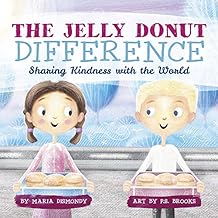
The Jelly Donut Difference (compassion and empathy)

I ordered The Jelly Donut Difference a few months back and keep forgetting to write a post about it. The Jelly Donut Difference is written by one of my favorite authors, Maria Dismondy.  I originally purchased The Jelly Donut Difference to read with my first graders during their unit on compassion and empathy.  After reading the book I decided to use it with a group of kindergarten students who are having a hard time getting along with their classmates.

Product Details
The Jelly Donut Difference is about a brother and sister who don't always get along (argue, push each other out of the way, etc...)  They notice that an elderly neighbor is lonely and work together to show empathy and compassion.  The author has a free Reader's Guide available.  Many of the pages are more beneficial to a classroom teacher, however, I did use the comprehension questions as well as the pages that are focused on making a difference.  I also downloaded a free lesson on TPT (link below) and found this to be the most useful in teaching the idea of kindness to kindergarten students.  Finally, I gave each student a kindness goal and rewarded them with jelly donut holes from dunkin donuts if they met their goal.  I also love the idea of doing a jelly cake in a crockpot for a classroom lesson and have included a link to that blog as well.


Connections:

You can purchase The Jelly Donut Difference HERE.

teachinginstripes.blogspot.com -jelly cake in a crockpot


Teacher's Pay Teacher's FREE lesson by An Apple A Day in First Grade


Another lesson and downloadable writing template HERE by www.primarily-speaking.com


Tuesday, January 31, 2017

Pouting

Product Details

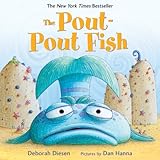
I have some k-1st grade students who are getting very good at pouting!  We have been using The Pout-Pout Fish as a way of discouraging this behavior.  Pout-Pout fish swims around the ocean with a permanent pout stuck on his face.  As he swims around the ocean he spreads the "dreary wearies".  I love that this book leads to a discussion about our own behaviors having an impact on those around us. I'm sure you can find this book somewhere in your school district as it is a very popular story.  If not, you can purchase it HERE.


I have used many different FREE items that I have found on TPT with this book.  My favorite is this one:  The Pout-Pout Fish. {making bad moods better} by Kristin-Young.  It gets students thinking about their own actions.

Whitney Palyu Bright Ideas  came up with some great discussion questions:  The Pout-Pout Fish - Language Extension Activities.


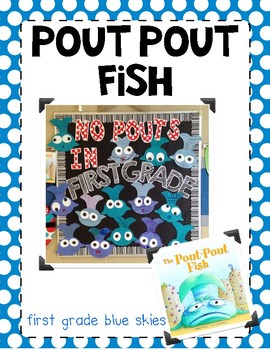
Pout Pout Fish by First and Kinder Blue SKies (I used the fish template from this lesson)
Pout Pout Fish~ Craft Template

The Pout-Pout Fish Reading Comprehension Activities by The Lesson Plan Diva (I used the final writing piece in this lesson:  Write and draw about a time that you felt sad)
The Pout-Pout Fish Reading Comprehension Activities

The Pout-Pout Fish" Printables by Miss Lee's Little Learners (I used the problem/solutions page)
"The Pout-Pout Fish" Printables

Pout Pout Fish Goes to School Response K-2
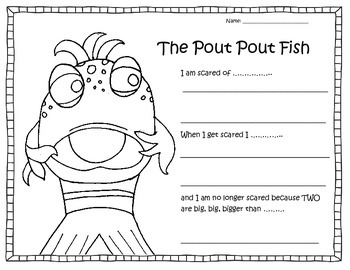
The pout pout fish worksheet


Thursday, November 5, 2015

There Is a Bird On Your Head! (Being Assertive)

I found the perfect book for teaching assertiveness!  I was in our school library and stumbled across the book There Is a Bird On Your Head!  The book is hilarious!  I use Second Step in grades K-2 and one of the skills for learning is Be Assertive so I used this book with my first graders and they loved it.  I also created a worksheet to go along with the book and had each child share their completed worksheet with the class.  If you don't teach Second Step or teach in the classrooms this book is still great for teaching assertiveness in individual or small group sessions.  So many of my referrals list "doesn't ask for help when needed" or "pouts and sulks when work is difficult" as a concern so I do a lot of work on assertiveness.  I would check your school library for this book as a lot of schools seem to have the Elephant & Piggie Books.  If not you can purchase it on Amazon for $6.00.


 I have students draw a picture of themselves with a bird on their head and then write on the lines below:

Wednesday, September 30, 2015

Fall-Themed Activities

Pumpkin Themed Counseling Activities:

Patch of Politeness Character Education Bulletin Board (Free)
I downloaded this...here is my bulletin board:


Self Discipline and the Spookley Pumpkin (ASCA aligned lesson and activity) ($1.50)

Pumpkin Emotions! 24 pages ($3)

What does it mean to be present? Pumpkin (Free)  Use with What Does It Mean To Be Present?

Spookley the Square Pumpkin

Fall Themed Counseling Activities
Fall Themed Teacher Appreciation Gift Tags (Thanks a Latte) (Free)

"I Be-Leaf" Positive Affirmations ($2)

Fall Social Emotional Activity Pack ($10)

Fall Social Emotional Activity Pack ($4)

Fall Feelings: Identifying Emotions ($3)

Fall Themed Social Scenario Flash Cards ($2)

October Conversation Questions for Social Skills and Writing ($1.75)

School Counselor's Fall COMBO Activity Pack- Savvy School Counselor ($24) ***I purchased this and it is well worth the money.  My favorite is the "something to crow about" activity.

Thanksgiving  Themed Counseling Activities:
Thanksgiving Following Directions (Free)

Turkey Perspective Taking (Free)

Expected Unexpected behaviors-Thanksgiving Dinner What are they thinking? (Free)

30 Days of Gratitude (Freebie)

Thanksgiving Pragmatics: Holiday Social Skills ($4.50)

Thanksgiving Themed Social and Emotional Activity Bundle ($7.50)

Feast of Good Manners: A Table Manners Card Game ($2.25)

Turkey Talk! Perspective Taking and Social Problem Solving/Expected Behaviors ($4)

Halloween Themed Counseling Activities:

School Counselor Halloween Activity Bundle ($10)

Trick or Treat: Think it or Say it? Filtering Thoughts ($3)

Halloween - make an emotion ($3.50)

Halloween Emotions Game ($3)

Halloween Party Social Story for Students with Autism (Free)

Halloween Themed Red Ribbon Week Posters and Activities ($5.50)

Social Skill Steps: Halloween Version ($3.50)

Say Boo to Bad Choices K-4th Grade Red Ribbon Week Activities ($7.00)

Don't Get Caught in the Web of Gossip Board Game ($3)

The Unexpected Adventures of Sid and Sis: Trick or Treat ($3)

The Horror of Not Managing Impulsivity SMARTboard lesson ($6)

Say "BOO" to Drugs! Red Ribbon Week Poster Project ($3.49)

Red Ribbon Week: "I Say Boo to Drugs!" ($1)

Say Boo to Drugs Color Sheet (Free)

Spook N Solve: a Problem Solving Pack ($6)

Fall Themed Books:
Frankie Stein Starts School (Respecting Differences)
Spookley the Square Pumpkin (self-acceptance)


Thursday, February 26, 2015

It's Okay To Be Different-We All Fit In!

I was recently introduced to Todd Parr's books and I have to say that I am loving them!  They are bright, colorful and pretty funny.  I just finished a lesson using It's Okay to be Different.  This is a lesson that I have done for years but I always used the book What I Like About Me!.  I like to switch things up but I could probably use both books and make the lesson even more meaningful!


Both of these books teach remind children that it's okay to be different. These books teach kindness, empathy, diversity and most importantly, self-acceptance.
Discussion:  What does the term diversity mean?  Take some time to discuss student's thoughts and ideas about diversity.  Do you know anyone who is like the characters in the story?  Why do you think the author used the colors that he did?  
Activity:  Play a version of "Simon Says" where students do something if they meet certain criteria.  Some examples:
If you are 7 years old stand up
If you have brown eyes put your hands on your head
If you wear glasses turn around
If you like green beans stand on one foot

Activity:  Play compliment tag  Have students sit in a circle and pick one person to be "it".  This student says another student's name and then gives that student a compliment.  The student responds by saying "Thank You".  The student who received the compliment is now "it" and must compliment another student in the group.  This continues until each student has had a chance to receive a compliment.

Activity:  Give each student a puzzle piece (link below).  You can have them draw a picture of them-self on the puzzle piece OR you can have them decorate it however they would like.  I have done both ways.  Once everyone is fineshed, put all of the pieces together.  Lead on discussion about all of the unique pieces coming together to create one beautiful picture.  


Diversity Puzzle:  Puzzle Pieces  or Puzzle Kit

Todd Parr's Webpage has some FUN stuff:  Fun Stuff

Connections:
It's Okay to Wear Boys Socks-A Very Diverse Lesson
It's Okay to be Colorful and Creative
It's Okay to Feel Different
Ipad App
It's Okay to be Different
Class Book Idea

Common Core Connections:
Literacy
RL.1.1 Ask and answer questions about key details in text.
RL.1.2 Retell stories, including key details, and demonstrate understanding of their central message or lesson.
RL.1.3  Describe characters, settings, and major events in a story, using key details.

Speaking and Listening
SL.1.1a Follow agreed-upon rules for discussion.
SL1.1b Build on others' talk in conversations by responding to the comments of others through multiple exchanges.

Friday, February 13, 2015

The Day It Rained Hearts

I always teach my "Bucket Filling" unit in February so that I can use this book:  The Day it Rained Hearts.


Cornelia August has a big heart and when it starts raining hearts, she catches them and uses them to make Valentine's Day cards.  Cornelia August puts a lot of thought into her cards, using just the right heart for each friend. This story can be used at any point during the school year but I try to use it around Valentines Day.   We have a discussion about kindness/thoughtfulness and relate this to the bucket filling concept.

Discussion Questions:
1.  Why did Cornelia Augusta make Valentines Day cards for her friends?
2.  Why did she study the hearts?
3.  Why did she cut holes in one heart?
4.  Why do you think that it was so important for Cornelia August to pick the perfect heart for each one of her friends?
5.  How do you feel when you get a thoughtful gift?
Activity:  After your discussion, have students create their own heartfelt gift.  You can keep this super simple and provide only paper and markers or you can provide simple materials such as paint, tissue paper, glitter, string, heart stickers, etc...

Connections:  you can find free printables here:  Teachers Pay Teachers.  Free Clipart images from the story HERE.  You could also get this activity for a few dollars:  Teachers Pay Teachers.

Some ideas for heartfelt projects:


Friday, March 22, 2013

Connecting Bully-Prevention with Common Core Standards

I will be back to share some bullying lessons that I have created, but for today I wanted to share some great links.  These links will take you to bullying lessons that are already connected to the Common Core Standards. 

This first link alignes a toolkit of bully-prevention activities with the Common Core Standards.
http://www.seiservices.com/21stcentury/PostConferencePresentations/Staser_Handout_1.pdf


This is an awesome resource!  The ABC's of Bullying Prevention shares 3 lessons for each grade level.  I was so excited to find this and wanted to share:
http://www.browardprevention.org/wp-content/uploads/2009/09/ABCs-of-Bullying-Prevention-Book.pdf

Think Twice Play Nice uses children's literature to take a stand against bullying.  They did a great job connecting their information to Common Core.  I will be ordering some new books for my classroom after reading this packet!
http://www.teachervision.fen.com/bullies/printable/72312.html

There are also some free samples of the Bully Free Program out there.  These are written for 2nd and 3rd grade:
http://www.bullyfree.com/files/products/SecondGradeBullyFreeLessonPlans(Samples).pdf
http://www.bullyfree.com/files/products/ThirdGradeLessonPlans(Samples).pdf


Monday, March 11, 2013

Alexander's Bad Day

I use Alexander and the Terrible, Horrible, No Good, Very Bad Day for individual, small-group and classroom counseling.  After all, everyone has bad days! 


Here are some links to lessons that I have used:
http://www.franklincollege.edu/pwp/cmahaffey/LitUnit.pdf

http://writingfix.com/6_Traits/Primary/Alexander_Bad_day.htm


Questions:

Why did Alexander have such a bad day?

Did anything good happen to him?

List the bad things that happened to Alexander:

What do you think was the worst thing that happened to Alexander on his bad day?

Could Alexander have done anything to make his day a little better?

What did Alexander’s mom say at the end of the story that made him feel better?

Why do you think Alexander wanted to go to Australia?

What are some things that have happened to you on the worst day you’ve ever had?

I have also used this:

I like to have students rewrite this story with a new title: Alexander and the wonderful, fabulous, very good day. (or something similar). Before we write the story, we brainstorm strategies for managing anger. In this new story, Alexander comes accross the same obstacles, this time using the strategies that we have talked about (for example, walking away, cooling off, talking it out).

Follow up: Have students share times that they used the conflict resolution/anger mangagment techniques.

ASCA Standards:  

PS:A1.5Identify and express feelings
PS:1.6 Distinguish between appropriate and inappropriate behavior
PS:1.8 Understand the need for self-control and how to practice it
PS:1.2 Understand consequences of decisions and choices
PS:B1.4 Develop effective coping skills for dealing with problems
PS:C1.10 Learn techniques for managing stress and conflict

Common Core (I used this lesson with 3rd graders):  


  • CCSS.ELA-Literacy.RL.3.1 Ask and answer questions to demonstrate understanding of a text, referring explicitly to the text as the basis for the answers.
  • CCSS.ELA-Literacy.RL.3.2 Recount stories, including fables, folktales, and myths from diverse cultures; determine the central message, lesson, or moral and explain how it is conveyed through key details in the text.
  • CCSS.ELA-Literacy.RL.3.3 Describe characters in a story (e.g., their traits, motivations, or feelings) and explain how their actions contribute to the sequence of events
  • CCSS.ELA-Literacy.SL.3.4 Report on a topic or text, tell a story, or recount an experience with appropriate facts and relevant, descriptive details, speaking clearly at an understandable pace
  • Thursday, March 7, 2013

    Connecting Common Core

    What is Common Core?
    The Common Core State Standards outline what ALL students are expected to learn, so teachers and parents know what they need to do to help them.  The standards are designed to outline the knowledge and skills that students need in order to be college and career ready.  You can access more information on the CCSS at http://www.corestandards.org/

    Why is Common Core important for School Counselors?
    Common core specifically states that the standards are to be addressed in all content areas.  Also, the main goal of common core is "college and career readiness".  The standards do not define the intervention or the methods necessary to get there, however, there are many aspects of college and career readiness that apply to school counseling. 

    How do I connect Common Core and School Counseling?
    I have found that I can easily incorporate the Common Core standards in my classroom guidance lessons, especially in the areas of speaking and listening, writing and reading.  Our district required that each teacher submit information showing how Common Core will be used in their classroom.  This is what I have come up with so far:


    This first chart shows the ASCA standards paired with Common Core Competencies:
    ASCA Standards
    (Goals)
    Common Core (Skills/Competencies)
    Academic
    Standard A:  Students will acquire the attitudes, knowledge and skills that contribute o effective learning in school and across the life span.
    o   Students will explore the information and arguments from various points of view to think critically and creatively and to solve problems.
    Standard B:  Students will complete school with the academic preparation essential to choose from a wide range of substantial post secondary options, including college.
    o   Students will learn how to apply the academic, critical, practical, technical, and employability skills needed for success in higher education and the work place and to manage their lives.
    Standard C:  Students will understand the relationship of academics to the world of work and to life at home and in the community.
    o   Students will actively explore the world of ideas.
    o   Students will demonstrate the effort and persistence needed to be successful in school, work and life.
    Career
    Standard A:  Students will acquire the skills to investigate the world of work in relation to knowledge of self and to make informed career decisions.
    o   Students will embrace career as a part of their future; acquire employable skills; demonstrate positive attitudes toward work; demonstrate attitudes and habits that are valued in the workplace; explore a range of careers; explore post secondary educational opportunities; manage data and use problem-solving and analytical skills to make reasoned decision.
    Standard B:  Students will employ strategies to achieve future career success and satisfaction.
    Standard C:  Students will understand the relationship between personal qualities, education and training and the world of work.
    Personal/Social
    Standard A:  Students will acquire the attitudes, knowledge, and interpersonal skills to help them understand and respect self and others.
    o   Students will work and learn independently and collaboratively as part of a team.
    o   Students will gain knowledge and understanding of other cultures.
    o   Students will demonstrate a sense of ethics and take responsibilities for their actions. 
    o   Students are active, constructive embers of the larger community.
    o   Students will develop and maintain behaviors that promote lifelong health.
    o   Students will understand the implications of living in a finite world.
    o   Students will understand the role of systems throughout our society.
    o   Students will understand the dynamic nature of society and the universality of change.


    Here is a list of ASCA Standards that can be connected to Common Core:

    A:A2.3 Use communications skills to know when and how to ask for help when needed

    A:A3.2 Demonstrate the ability to work independently, as well as the ability to work cooperatively with other students.

    A:B1.1 Demonstrate the motivation to achieve individual potential

    A:B1.2 Learn and apply critical-thinking skills

    A:B 1.3 Seek information and support from faculty, staff, family and peers

    A:B1.5 Organize and apply academic information from a variety of sources

    A:B1.7 Become a self-directed and independent learner

    A:B2.2 Use assessment results in educational planning (ELA & Math CCSS)

    A:B2.5 Use problem-solving and decision making skills to assess progress toward educational goals

    A:B2.7 Identify post-secondary options consistent with interests, achievement, aptitude and abilities

    A:C1.3 Understand the relationship between learning and work

    A:C1.6 Understand how school success and academic achievement enhance future career and vocational opportunities

    C:A1.1 Develop skills to locate, evaluate and interpret career information

    C:A1.2 Learn about the variety of traditional and nontraditional occupations

    C:A1.4 Learn how to interact and work cooperatively in teams

    C:A2.1 Acquire employability skills such as working on a team, problem-solving and organizational skills

    C:A2.2 Apply job-readiness skills to seek employment opportunities

    C:B1.5 Use research and information resources to obtain career information

    C:C1.1 Understand the relationship between educational achievement and career success

    C:C2.3 Learn to work cooperatively with others as a team member

    PS:A1.5 Identify and express feelings

    PS:A1.9 Demonstrate cooperative behavior in groups

    PS:A2.1 Recognize that everyone has rights and responsibilities

    PS:A2.2 Respect alternative points of view

    PS:A2.3 Recognize, accept, respect and appreciate individual differences

    PS:A2.4 Recognize, accept and appreciate ethnic and cultural diversity

    PS:A2.6 Use effective communications skills

    PS:A2.7 Know that communication involves speaking, listening and nonverbal behavior


    Finally, these are the Common Core standards that I will be addressing in my classroom guidance lessons:  
    Reading Standards: [RL.x.1-10]& [RI.x.1-10]
    Key Advances and Fluency Considerations Per Grade Level:
     
    K-2 RL1 Ask and answer questions about key details in a text.
    3-5 RL 1 Refer to details and examples in a text when explaining what the text says explicitly.
     
    K-2 RL1 
    3-5 RL 2 Determine a theme of a story, drama, or poem from details in the text.
     
    K-2 RL 3  Describe how characters in a story respond to major events and challenges.
    3-5 RL 3  Describe characters and how their actions contribute to the sequence of events.
     
    K-2 RI 1  Ask and answer questions about key details in a text
    3-5 RI 1Refer to details and examples in text.
     
    K-2 RI 2  Identify the main topic and retell key details of a text
    3-5 RI 2 Determine the main idea of a text and how it is supported by key details; summarize the text.
     
    3-5 RI 4  Determine the meaning of general academic and domain-specific words or phrases in a text relevant to grade topic
     
    3-5 RI 7  Interpret information presented visually, orally, or quantitatively and explain how the info contributes.
     
    3-5 RI 9  Integrate information from 2 texts on the same topic in order to write or speak about the subject knowledgeably.
     
    K-2 RI10 Read age appropriate informational texts.
    3-5 RI10 Read age-appropriate informational texts.


    Writing Standards: [W.x.1-10]
    Key Advances and Fluency Considerations Per Grade Level:
    [Review PARCC Progression Chart & CCSS]
     
    K-2 W1  Write opinion pieces, supplying supports for that opinion.
    3-5 W1  Write opinion pieces on topics, supporting a point of view.
     
    3-5 W4  Write clear and coherent writing in which the development, organization, and style are appropriate to task, purpose, and audience.


    Speaking & Listening: [SL.x.1-6]
    Key Advances and Fluency Considerations Per Grade Level:
    [Review PARCC Progression Chart & CCSS]
     
    K-2 SL1 Participate in collaborative conversations with diverse partners.
    3-5 SL1 Engage effectively in a range of collaborative discussions (one-on-one, groups, teacher led).
     
    K-2 SL2 Ask and answer questions about details presented orally or through other media.
    3-5 SL2 Determine the main idea, paraphrase information, or summarize text read aloud or presented in diverse media.
     
    K-2 SL3 Ask and answer questions in order to seek help, increase understanding, or gain additional information.
    3-5 SL3 Ask and answer questions about information from a speaker, identify reasons and evidence a speaker provides, summarize the points a speaker makes.
     
    3-5 SL 4  Report on a topic or text, tell a story, or recount an experience in an organized manner, using appropriate facts...
     
    3-5  SL 5 Add audio recordings and visual displays to presentations to enhance the development of main ideas or themes.
     
    College and career ready:  Prepare for and participate effectively in a range of conversations and collaborations with diverse partners, building on other’s ideas and expressing their own clearly and persuasively. 

    I will give some examples of lessons in future posts!